2026 IL Fund Minority Scholarship Program Winner Bio
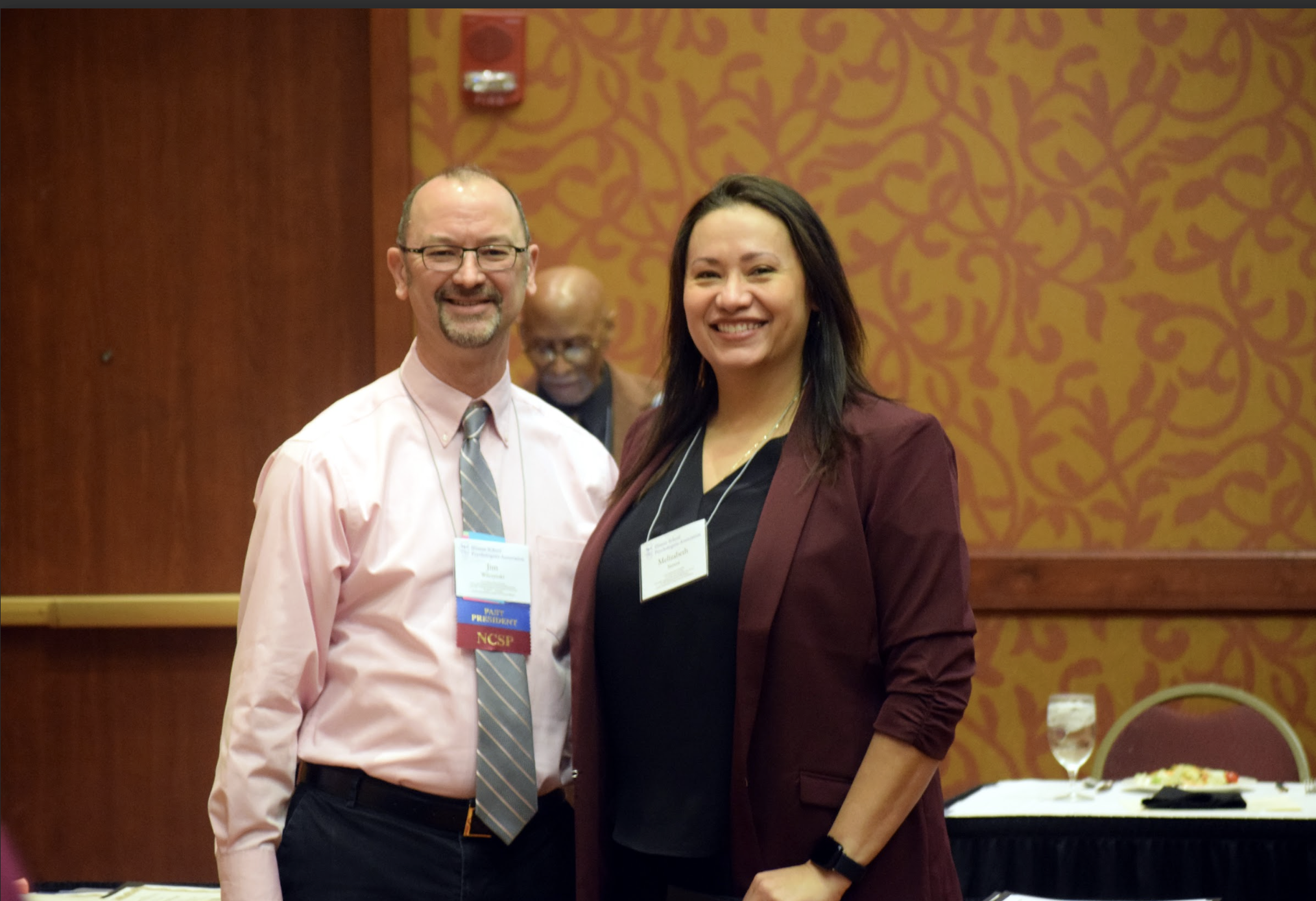
Dr. Melizabeth Santos
Autobiographical Statement
My entire career has been in education. Since receiving my Professional Educator license in 2001, I have worked in many Learners as they learned history different settings from grades PK-16. I began my career as a high school Spanish and Social studies teacher also charged with supporting the English acquisition of multilingual learners as they learn history. I transitioned to supporting elementary-aged, struggling readers in a dual language school. Currently, I prepare candidates for Illinois licensure in the Teacher Education Program at Dominican University.
The past twenty-five years as an educator have afforded me the opportunity to work with a variety of ages and subjects. I am most grateful, however, for the cumulative experience in different language education programs that has shaped my trajectory and ultimately led me to pursue licensure in school psychology. I began my career serving students in their acquisition of Spanish as a world language. Then, I worked with emergent bilingual students learning English. When life brought me to a dual language setting. I had found greater purpose. In this context, I was serving emergent bilingual students in ways that enabled them to keep their native language and their full cultural identity. Dual language education is growing in popularity and more children are benefitting from this. At the same time, the manner in which the system identifies dual language students that also need specialized services such as Special Education or gifted/accelerated learning deserves more attention. Even in my current practicum site I have learned of cases in which Latino parents are told they need to choose between special education services and bilingual education for their child. I am interested in better understanding the intersections of bilingual education and special/gifted education. To truly I wish to add School Psychology to my credentials to enact structural change to truly expand the benefits of bilingual and bicultural education to all children. I felt called, at this time in my life, to realize this goal as a recipient of a Department of Education grant meant to license bilingual school psychologists. The loss of this funding is an obstacle, but I am determined to overcome it. The support of the Illinois Fund for Careers in School Psychology would mean a lot to me in reaching this goal.
There have been two significant experiences that inspired me to work for this certification. First, I served as the Multi-Tiered Systems of Support Director while at Interamerican Magnet School, the oldest dual language school in the Midwest. Because it is a wall-to-wall dual language school, every student in that building was a language learner. Some students were acquiring English; some students were acquiring Spanish. When a student’s academic struggles surfaced in MTSS meetings the impact of language learning was always in question. I knew that emergent bilingual students from languages other than English are often over-identified for Special Education. In response to this persistent question, and because of the population of students that we had, the principal, school psychologist, and I devised a language cohort system as peer comparison. We coded students based on native language and proficiency estimates of their second language. By comparing students to only their language peers, and in combination with consistent MTSS data, we were able to more confidently make decisions about recommending students for further evaluation for Special Education.
The second experiences that has motivated me to add school psychology to my education credentials is advocating for my own bilingual children. I am lucky to be the mother of a twice-exceptional child. My son has been identified through neuro-psychological evaluations to be both gifted and have ADHD. His test scores for aptitude and logic are impressive, but he struggles with daily classroom tasks. In addition, he is learning in a bilingual setting. As such, in his achievement tests such as NWEA, which are only presented in a monolingual format, he missed the mark for our district’s Gifted Program according to their district rubric. Through multiple meetings with district officials in which I brought empirical research and best practices in other dual language settings, I’ve been lobbying the case that bilingual children that are learning simultaneously in two languages will not perform the same on two, separate monolingual exams. My argument has been that the identification process had to specifically consider the learning context as well as the linguistic assets of bilingual children. I am proud to say that not only was my son subsequently invited into the gifted program, but I was part of the advocacy that resulted in the district-wide revamping of the gifted program identification rubric to include language considerations for students in the dual language programs.
After certification, my career goals include to immediately work in high-needs districts by conducting and interpreting educational and psychological assessment results for emergent bilingual students. I am open to this type of work as a consultant part-time, or full-time capacity. However, to feel personally fulfilled, I will seek to work in settings of Bilingual Education, ideally dual language.
|