2026 IL Fund Minority Scholarship Program Winner Bio
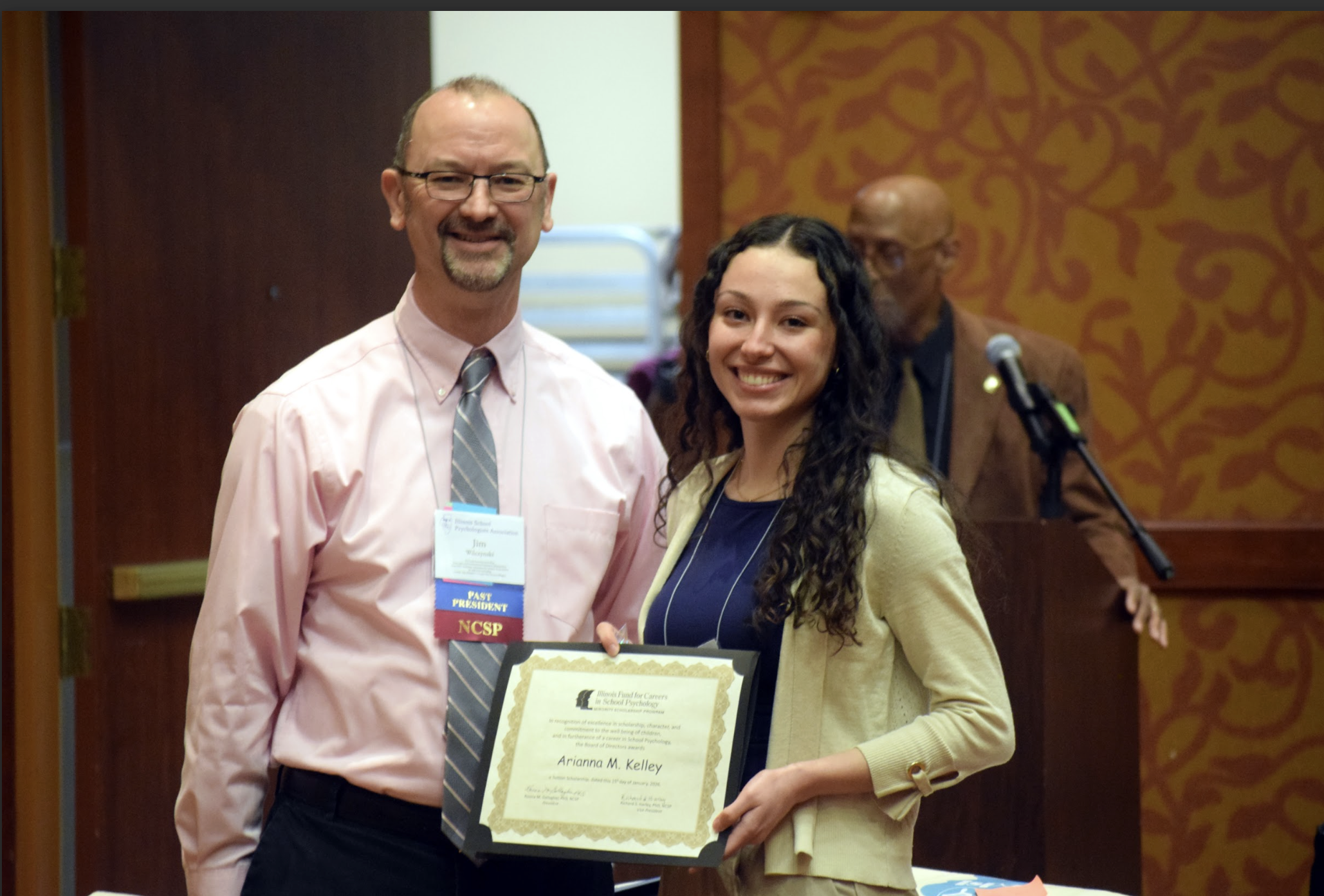
Arianna M. Kelley
Autobiographical Statement
I had just finished my first day shadowing a school psychologist in a suburb of Ohio when a Hispanic kindergartner said to me with a bright smile, “You look just like my mom! She wears her hair like that.” She immediately started telling me about herself and her family. Later on, the school psychologist commented that she was very surprised how the little girl opened up to me because she tended to be shy around adults. Growing up as a low-income Hispanic student in a predominantly White, suburban school district, I too found comfort in Hispanic staff who reminded me of my own family and culture. Although I had always wanted a career that would allow me to make a positive impact, this interaction helped me recognize my passion for advocating for minorities students who, due to systemic inequities, may not experience the comfort of seeing staff they identify with. Without this comfort, many are less likely to seek or engage with resources such as mental health services, especially if English is not their native language. This kindergartner’s comment underscored the importance of diversity among school professionals and advocating for students of all cultural backgrounds. I see myself contributing to these efforts as a bilingual school psychologist providing mental and behavioral health services and support to students who otherwise might not access them.
My interest in school psychology solidified when I participated in a summer service program in Honduras before my junior year at the University of Notre Dame. While living at the children’s home La Finca del Niño, I taught English to a 9th grade class and worked individually with two girls who had learning disabilities: Jara, a 5th grader with reading and Rory, a 2nd grader who struggled with math and reading. I was tasked with helping Jara read her first chapter book. My first day with her, she read out loud so quietly, I nearly bumped heads with her trying to hear her. I realized she felt embarrassed to read to me. Her special education teacher explained that many students with learning disabilities experience low academic confidence due to insufficient resources and support, and those they are often bullied or maltreated because their needs go unaddressed. Education systems often force students to change, reluctant to adapt to better support the students’ needs. As a school psychologist, I plan to advocate for appropriate supports for under-resourced students by promoting environments that provide targeted interventions, tutoring, counseling small groups, or special education services. It is especially paramount to start appropriate intervention at a young age as a child’s brain is more malleable. In my career, I want o be a resource for students to uplift themselves and build their own confidence starting at a young age.
During my undergraduate years, I participated in a research lab for four semesters studying the efficacy of vagus nerve stimulation in reducing suicidal ideation and self-harm in teens. I developed strong interpersonal and analytical skills by interviewing participants, informing parents to obtain consent and assent from teens, testing and debriefing research methods, and completing data entry. These skills will support my future work in collaborating with teachers and parents about intervention plans for students and in assessing students’ needs.
My undergraduate leadership experiences further strengthened my collaboration and problem-solving skills. As the Anchor Intern for Latino Student Ministry, I was responsible for planning and executing various Latino and faith-related events on campus and a retreat for first-year Latino students at Notre Dame. For each of these events, I organized a planning process, coordinated various student group leaders, delegated tasks in a respectful and clear manner, and adapted when plans changed. I learned the importance of listening to others’ perspectives and ideas in the planning and executing process as relying solely on my perspective can be damaging to project outreach and efficacy.
As a future school psychologist, I plan to positively impact students’ lives by providing sufficient mental, emotional, and academic support. I have a passion for working with minoritized elementary-aged students due to my own background and the efficacy of early intervention. Ultimately, I hope to proactively work to make the education system more inclusive, supportive, and equitable through my interactions with students students, parents, teachers and school staff.
|